
Find California Death Records
California death records help you find vital info about people who died in the state. The California Department of Public Health keeps death certificates from July 1905 to now. County offices have more recent records from the last two years. You can search death index data online or ask for certified copies by mail or in person. Each method gives you access to key facts like name, date of death, place of death, and more details about the person.
California Death Index Quick Facts
California Death Records at CDPH
The California Department of Public Health Vital Records office is where you go for most death certificates. CDPH-VR has every death that took place in the state from July 1905 on. They keep a permanent public record. Anyone can ask for an informational copy of a death certificate. If you need an authorized copy, you must prove your relationship to the deceased person.
CDPH processes requests by mail, in person, or through a third party vendor called VitalChek. Mail orders go to P.O. Box 997410, Sacramento CA, 95899-7410. Their physical address is 1501 Capitol Avenue in Sacramento. You can call them at (916) 445-2684 during business hours Monday through Friday, 8AM to 4PM. Death records become available about two weeks after the date of event.
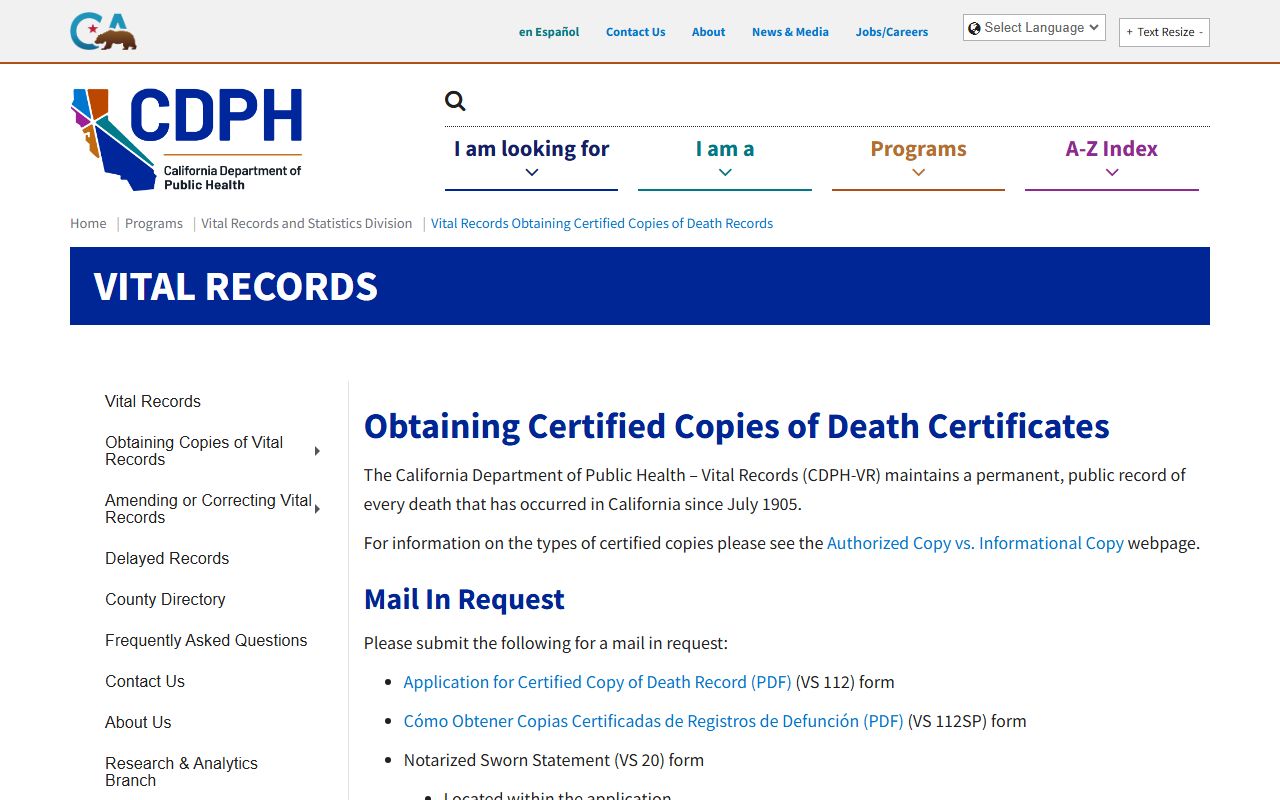
You must complete an Application for Certified Copy of Death Record form, which is known as VS 112. This form asks for the deceased person's full name, date of death, place of death, and your relationship to them. If you want an authorized copy instead of an informational one, you need to include a notarized sworn statement under penalty of perjury. Law enforcement agencies, government offices, and funeral homes can skip the notary requirement for death records. The fee for a search and one certified copy is $26 as of January 1, 2026. If CDPH cannot locate the record based on what you provide, they keep the search fee and issue a Certificate of No Public Record instead. Visit the CDPH death records page to learn more.
Processing times at CDPH run about 15 business days for standard mail requests. In-person visits to their Sacramento office may offer faster service depending on the day and time. Online orders through VitalChek take about 1 to 6 weeks depending on shipping method. You can check current processing times at the CDPH processing times page. Rush services may be available for an extra fee. Death certificates issued by CDPH include the state file number, which some agencies require. County copies may not show this number.
Death Certificates at County Offices
Each county in California handles death registration through local offices. County Clerk-Recorder offices and County Public Health departments both maintain death certificates for events in their county. Most counties only keep certificates for deaths that occurred in the last two years or so. After that, you need to contact the county Clerk-Recorder or go directly to CDPH for older records.
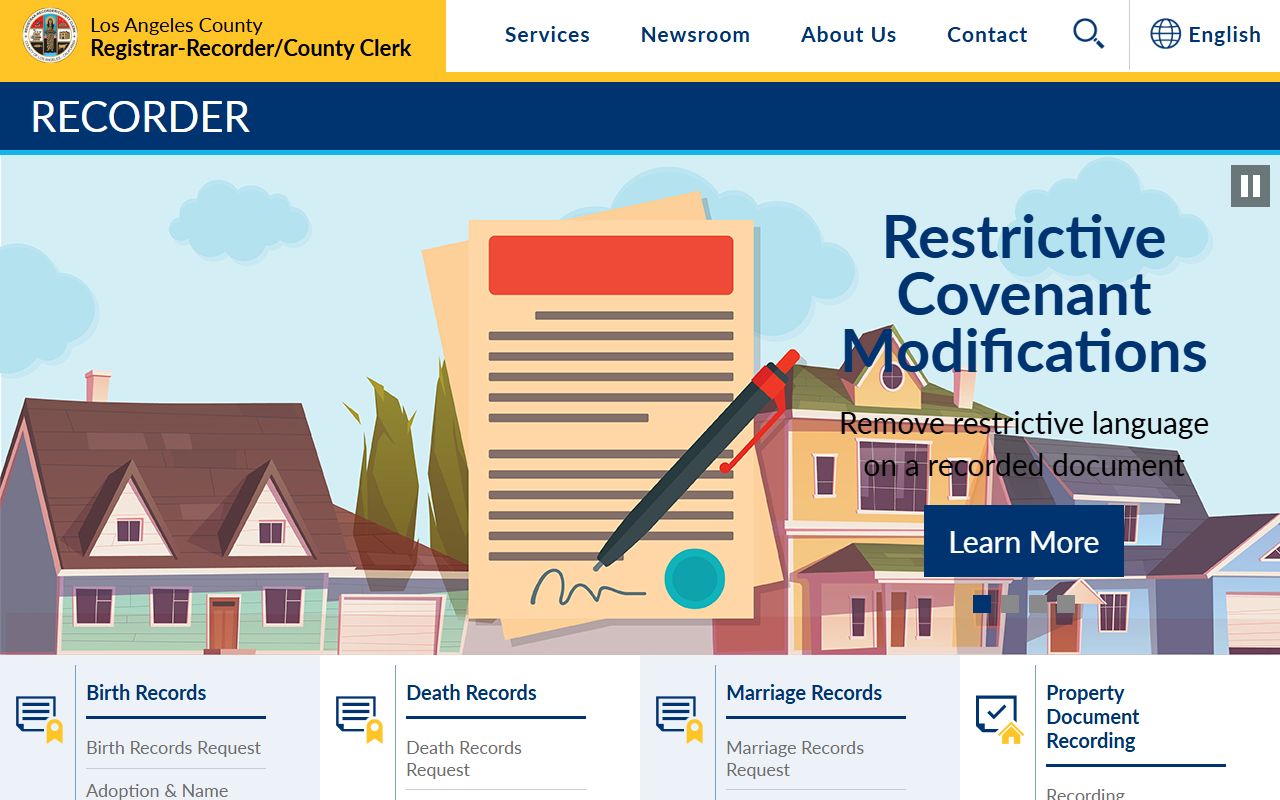
Los Angeles County has records from 1892 to present at the Registrar-Recorder/County Clerk office. They charge $23 per copy as of 2026. Records are not available until 90 days after the date of event. Orange County has birth and death certificates from the last 24 months through the Office of Vital Records at the Health Care Agency. Their fee is $26 per copy. For records older than two years, you contact the Orange County Clerk-Recorder instead. San Diego County provides death certificates through the Office of Vital Records and Statistics at a cost of $26. They moved to a new location at 5530 Overland Avenue, Suite 170 in San Diego effective June 23, 2025.
Riverside County splits vital records between the County Clerk-Recorder and the University Health System Public Health Office of Vital Records. Death certificates take about 8 days from the date of death before they become available. San Bernardino County receives death certificates 30 to 60 days after the event. If you need it sooner, call the San Bernardino County Department of Public Health. Most county offices accept requests in person, by mail, and through online portals. Fees range from $23 to $30 depending on the county. VitalChek also processes online orders for all 58 counties in the state.
To request a death certificate from a county office, you typically need the deceased person's full name, date of death, and place of death. Some counties ask for additional details like age at death or parents' names to help locate the right record. Payment is required in advance. If the office cannot find the record, most counties do not refund the search fee. In-person requests often get processed the same day or within a few business days. Mail orders take longer, usually 1 to 3 weeks. Check the county's website or call ahead to confirm current fees, hours, and processing times.
Historic California Death Records
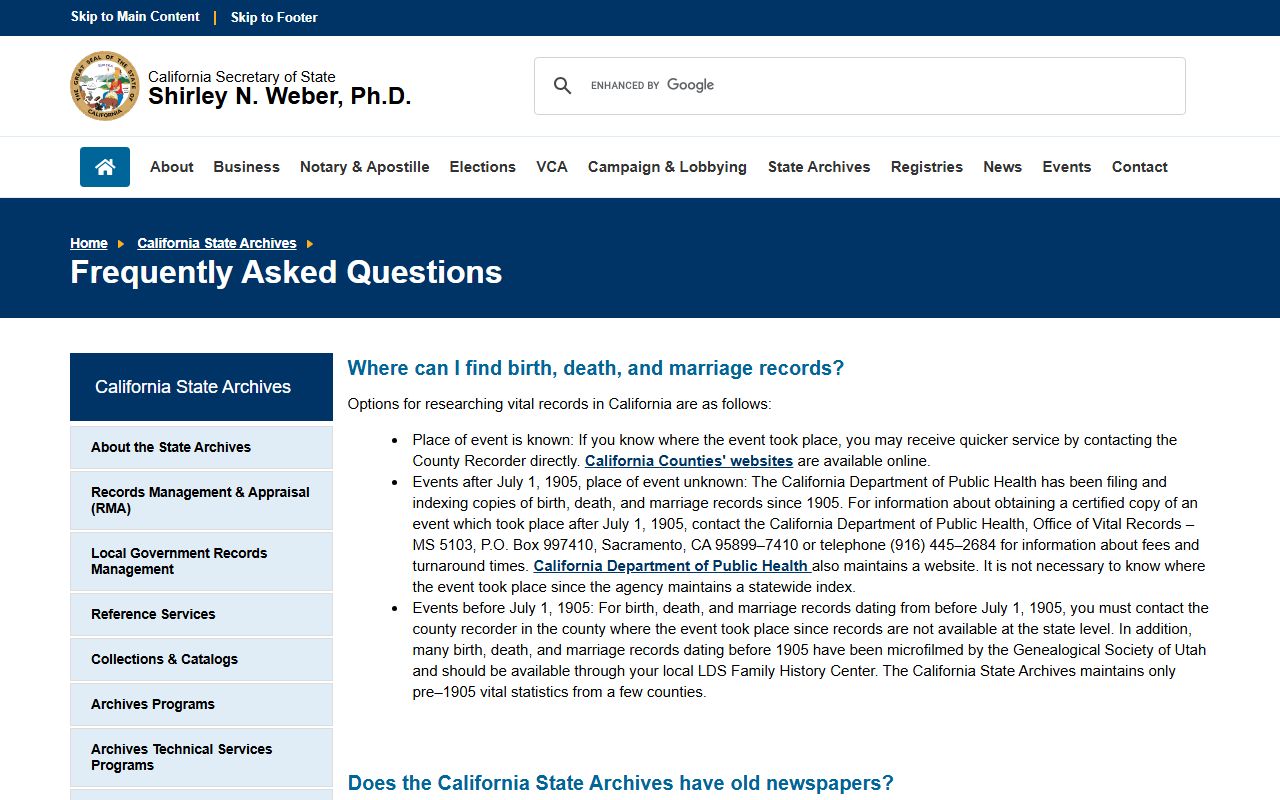
Death records from before July 1905 are not available at the state level. You must contact the county recorder where the death occurred. Some counties have very old death records going back to the 1800s. The California State Archives holds microfilm copies of death records from 28 counties for certain date ranges. These are mostly records more than 75 years old, which are open to the public without restriction.
Examples include Butte County death records from 1888 to 1939, Colusa County from 1878 to 1921, El Dorado County from 1907 to 1928, Fresno County from 1878 to 1950, Santa Clara County from 1873 to 1905, Sutter County from 1905 to 1921, and Yolo County from 1863 to 1913. Most of these microfilm records were produced by the Genealogical Society of Utah. The State Archives is located at 1020 O Street in Sacramento. You can call (916) 653-6814 or email ArchivesWeb@sos.ca.gov to ask about specific records. Visit the county and city records page for a full list of what they hold.
Public Death Data in California
California publishes death statistics and profiles through open data portals. These do not give you individual death certificates. They provide summary data by county, zip code, and other categories. Researchers, public health officials, and the general public can use this data to study trends.
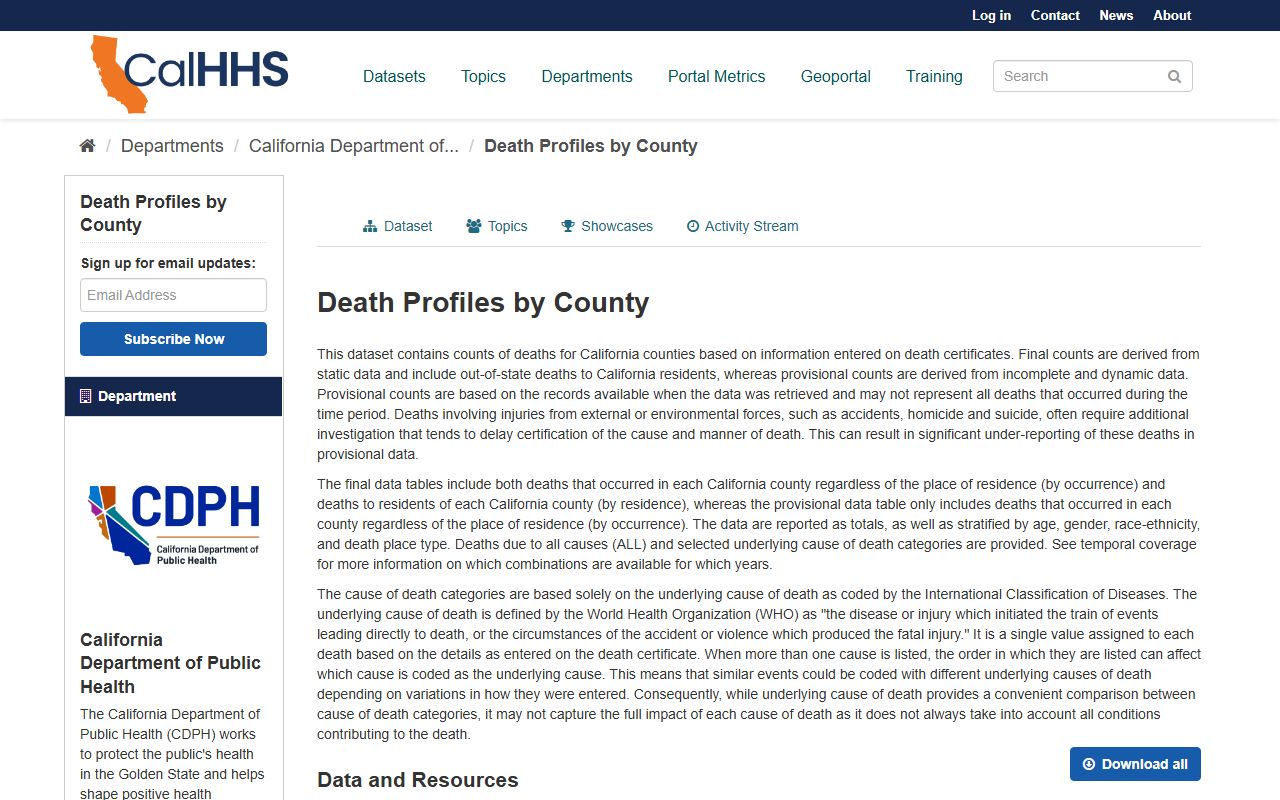
The California Health and Human Services Open Data Portal has three main death datasets. Statewide Death Profiles show aggregate numbers and rates across the whole state. Death Profiles by County break down the data for each of the 58 counties. Death Profiles by ZIP Code give even more local detail. You can download these files or view charts online. The data does not include names or personal details about individuals. It shows counts, rates, and demographic breakdowns.
Access the datasets at the statewide death profiles page, the county death profiles page, and the ZIP code death profiles page. These are free to use and updated regularly.
California Death Record Laws
State law controls who can get death records and what you must do to request them. Health and Safety Code Section 103526 sets the rules for authorized copies versus informational copies. An authorized copy can be used to establish the identity of the person named on the certificate. Only certain people can receive authorized copies. These include a parent, legal guardian, child, grandparent, grandchild, sibling, spouse, or domestic partner of the deceased. Also eligible are members of law enforcement or government agencies conducting official business, persons or agencies empowered by statute or court order, attorneys representing the deceased or the estate, funeral home employees acting within their scope of work, and surviving next of kin as specified in Health and Safety Code Section 7100.
If you do not fall into one of those categories, you can still get an informational copy. This type of copy has a legend stamped on it that says "INFORMATIONAL, NOT A VALID DOCUMENT TO ESTABLISH IDENTITY." Informational copies are mainly used for genealogy or historical research. They do not work for legal purposes like claiming insurance or changing your name. You can view the full text of the law at Health and Safety Code Section 103526.
Health and Safety Code Section 102775 requires each death to be registered with the local registrar of births and deaths within eight calendar days after death and prior to any disposition of the human remains. The death must be registered in the district where it was officially pronounced or where the body was found. This law ensures that every death gets recorded in a timely manner. You can read it at Health and Safety Code Section 102775.
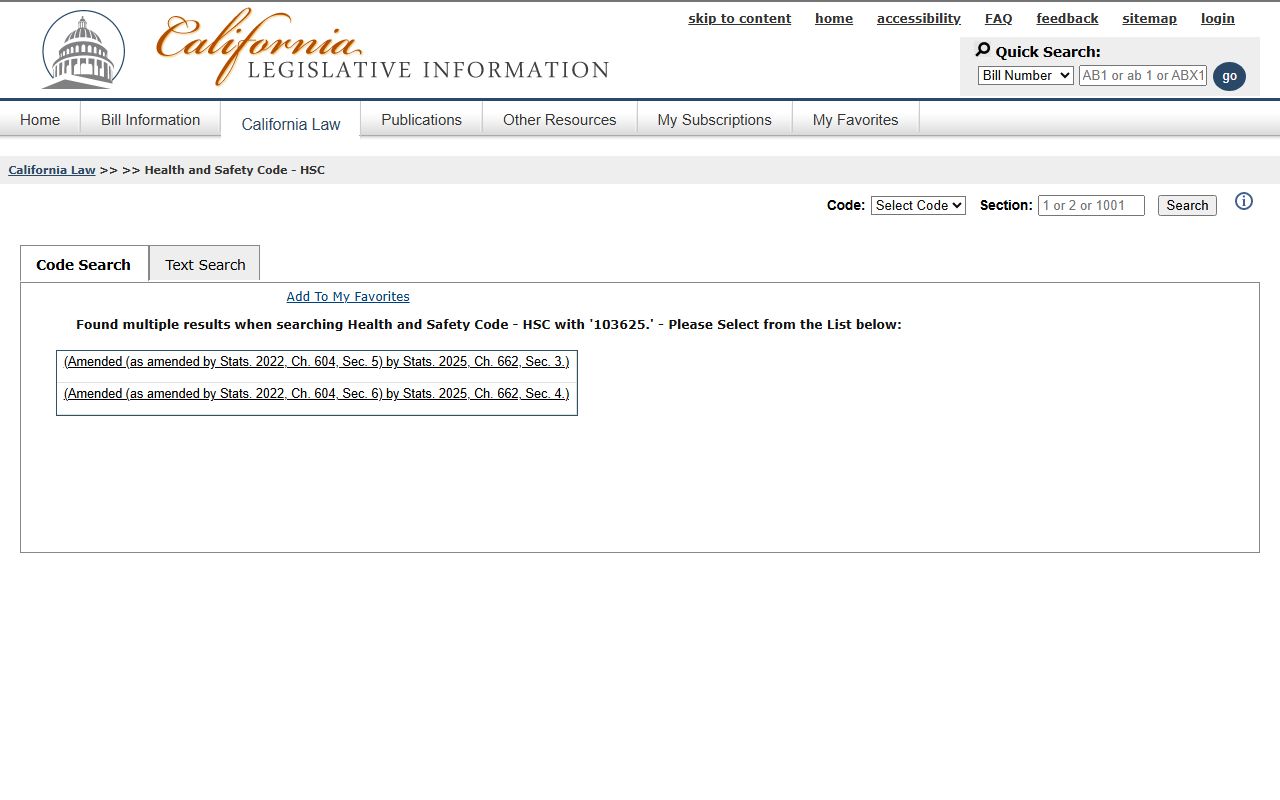
Fees for certified copies are set by Health and Safety Code Section 103625. The base fee is $12, but Assembly Bill 64 added a $2 increase effective January 1, 2026. This brings the current cost to $26 per death certificate. The fee structure also allows the custodian of records to retain the search fee even if no record is found. That rule is in Health and Safety Code Section 103650. Check Health and Safety Code Section 103625 for fee details.
Order Death Certificates Through VitalChek
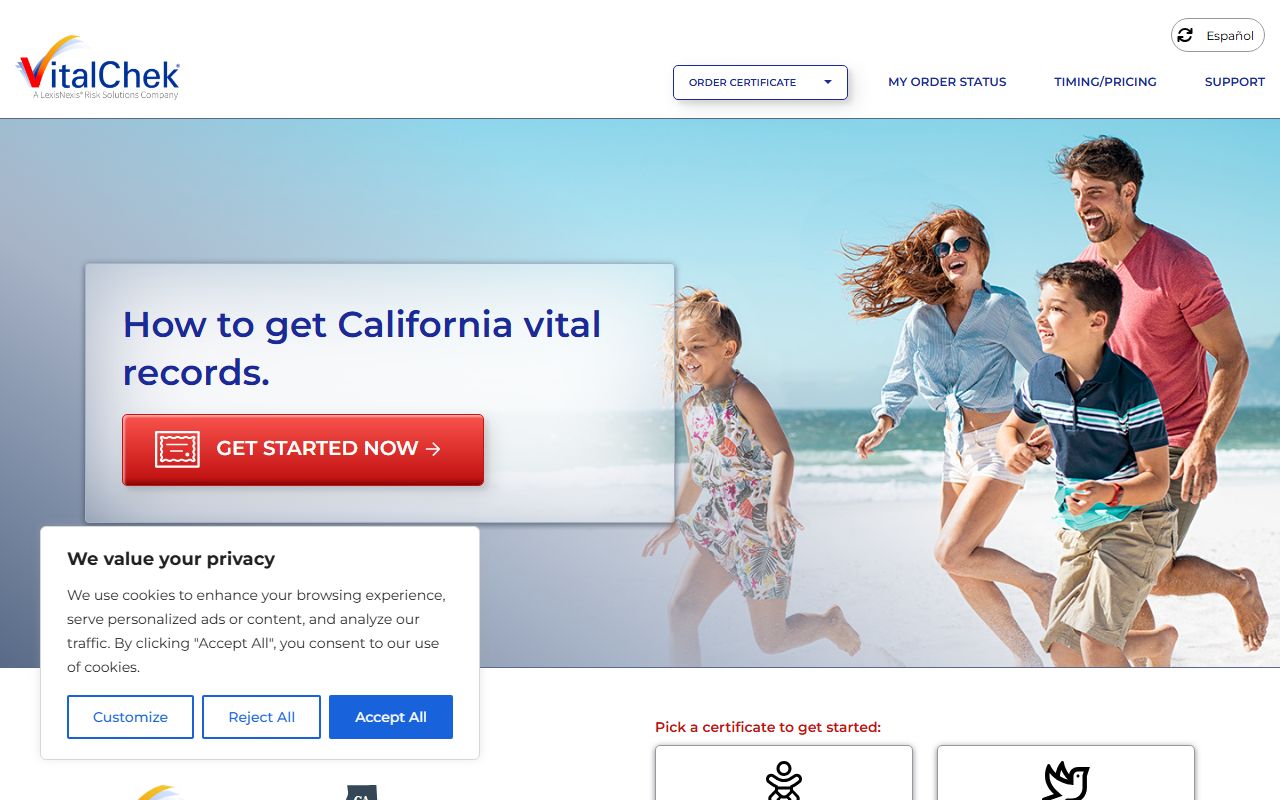
VitalChek Network, Inc. is an authorized third-party vendor for California vital records. They process online orders for the state and all 58 counties. Using VitalChek is faster than mailing a paper application, but you pay extra service fees on top of the state's $26 certificate fee. VitalChek charges a processing fee that typically runs $12.95, plus shipping fees if you want expedited delivery. Regular mail has no extra shipping charge. UPS priority shipping costs around $19 to $21 depending on the county.
You can place an order at the VitalChek California page or call (800) 669-8312. The website walks you through each step. You enter the deceased person's information, select how many copies you want, choose your shipping method, and pay with a credit card. VitalChek accepts American Express, Discover, MasterCard, and Visa. Processing times vary but usually take 1 to 6 weeks from order to delivery.
Note: VitalChek fees are in addition to the state certificate fee and are non-refundable even if the record is not found.
Who Can Request Death Records
Anyone can request an informational copy of a California death certificate. No special relationship is required. You just fill out the application form, pay the fee, and submit your request. Informational copies work well for family history research or genealogy projects. They contain the same information as an authorized copy, but they have a stamp that says they cannot be used to establish identity.
Authorized copies require proof of eligibility. You must show that you are related to the deceased person or that you have a legal reason to obtain the record. The application form VS 112 lists all the categories of authorized requesters. When you apply for an authorized copy, you must complete a sworn statement under penalty of perjury and have it notarized by a notary public. The notary verifies your identity and witnesses your signature. One sworn statement covers multiple records in the same order, so you do not need a separate notarization for each certificate.
Some requesters are exempt from the notary requirement. Law enforcement agencies conducting official business do not need notarization. Government representatives also skip this step when requesting records for official duties. Funeral establishments can get death records without a notary as long as the employee is acting within the scope of their employment and on behalf of the funeral home. All other requesters must have their sworn statement notarized. If a foreign notary notarizes your statement, you must attach an apostille to the document.
Fees and Processing Times
The fee for a certified copy of a death record is $26. This price went into effect on January 1, 2026 following the passage of Assembly Bill 64. The fee covers a search of the files and one certified copy. If you order multiple copies of the same record at the same time, each additional copy also costs $26. Payment must be made in advance. CDPH accepts personal checks or money orders made payable to "CDPH Vital Records." They do not accept cash by mail. In-person visitors can pay with cash, check, money order, or a debit or ATM card. VitalChek online orders require a major credit card.
If the office cannot locate the record you requested, the law allows them to keep the search fee. They will issue a Certificate of No Public Record instead of a death certificate. This document confirms that they searched their files and did not find a match based on the information you provided. The search fee is not refunded in this case. Make sure you provide accurate details about the deceased person to avoid this outcome. Double-check the spelling of names, the date of death, and the county where the death occurred before you submit your request.
Processing times depend on the method you choose. Mail-in requests to CDPH take approximately 3 to 6 weeks from the time they receive your application. Their standard processing time is 15 business days, but you also need to account for mail delivery both ways. In-person requests at the CDPH Sacramento office or at a county office can be completed the same day or within a few days. Online orders through VitalChek usually take 1 to 6 weeks depending on which shipping option you select. Check the CDPH processing times page for current estimates.
What You Need to Request a Record
To request a California death certificate, gather the following information:
- Full legal name of the deceased person
- Date of death or approximate year
- Place of death including city and county
- Your relationship to the deceased if requesting an authorized copy
- Payment for the $26 fee
Additional details help locate the right record faster. These include the deceased person's age at death, birth date, parents' names, spouse's name, and social security number if you have it. The more accurate information you provide, the easier it is for staff to find the correct certificate. If you are unsure about the exact date or spelling of a name, include a note with your best estimate. The office will search based on what you give them.
For authorized copies, you also need a notarized sworn statement unless you qualify for an exemption. Download the VS 112 form at the CDPH forms page. Fill out Part 1 by checking the box that describes your relationship to the person on the certificate. Complete the sworn statement section on page 5 of the application. Take the form to a notary public and sign it in front of them. The notary will stamp and sign the form. Then mail or deliver the completed application with your payment.
Find Your County Office
CDPH maintains a directory of all county registrars and recorders. This list has contact information for the office in each of California's 58 counties. Use it to find the local office that handles death certificates for a specific county. The directory includes addresses, phone numbers, and links to county websites.
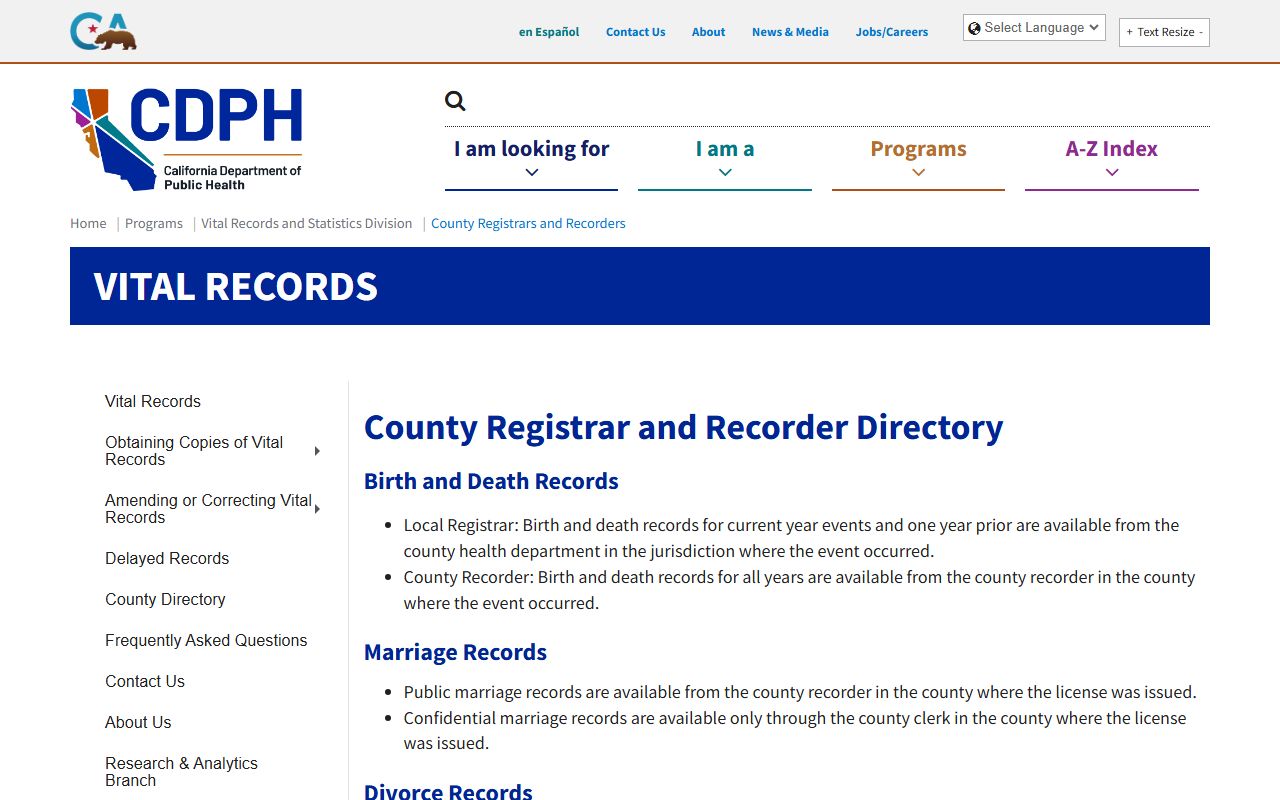
Visit the county registrars directory to look up the office in the county you need. Each county has its own procedures, fees, and hours of operation. Calling ahead before you visit can save you time and ensure you bring everything you need.
Browse California Death Records by County
Each county office handles death certificates for events in that county. Pick a county below to find local contact info and resources.
Death Records in Major California Cities
Most cities direct residents to county offices for death certificates. A few large cities maintain their own vital records offices. Pick a city below to learn about death records in that area.