Lassen County Death Index
Lassen County death records are kept by the county recorder in Susanville. The office has files for all deaths that happened in Lassen County. You can get copies for legal work or family history. Most requests are handled by mail or in person. The recorder division keeps track of vital records including death certificates. They can search their files if you give them the name and date. Records go back over 100 years. Newer files are in digital form. Older records may be in books or on microfilm. The staff can help you find what you need if you visit the office.
Lassen County Quick Facts
- County Seat: Susanville
- Population: 32,730
- Region: Northeastern California
How to Order Death Certificates
The County Clerk-Recorder runs the vital records program in Lassen County. If you want a death certificate, you need to fill out an application form. The form asks for the name of the person who died, when they died, and where. You also put down your name and why you need the record. Family members can get authorized copies. Other people get informational copies.
An authorized copy is for legal use. It proves identity and can be used for insurance claims, estates, and bank accounts. The informational copy is for genealogy and family trees. It has the same info but it's stamped to show it can't be used for legal ID. You need a notarized statement to get an authorized copy. The clerk can explain the difference when you call.
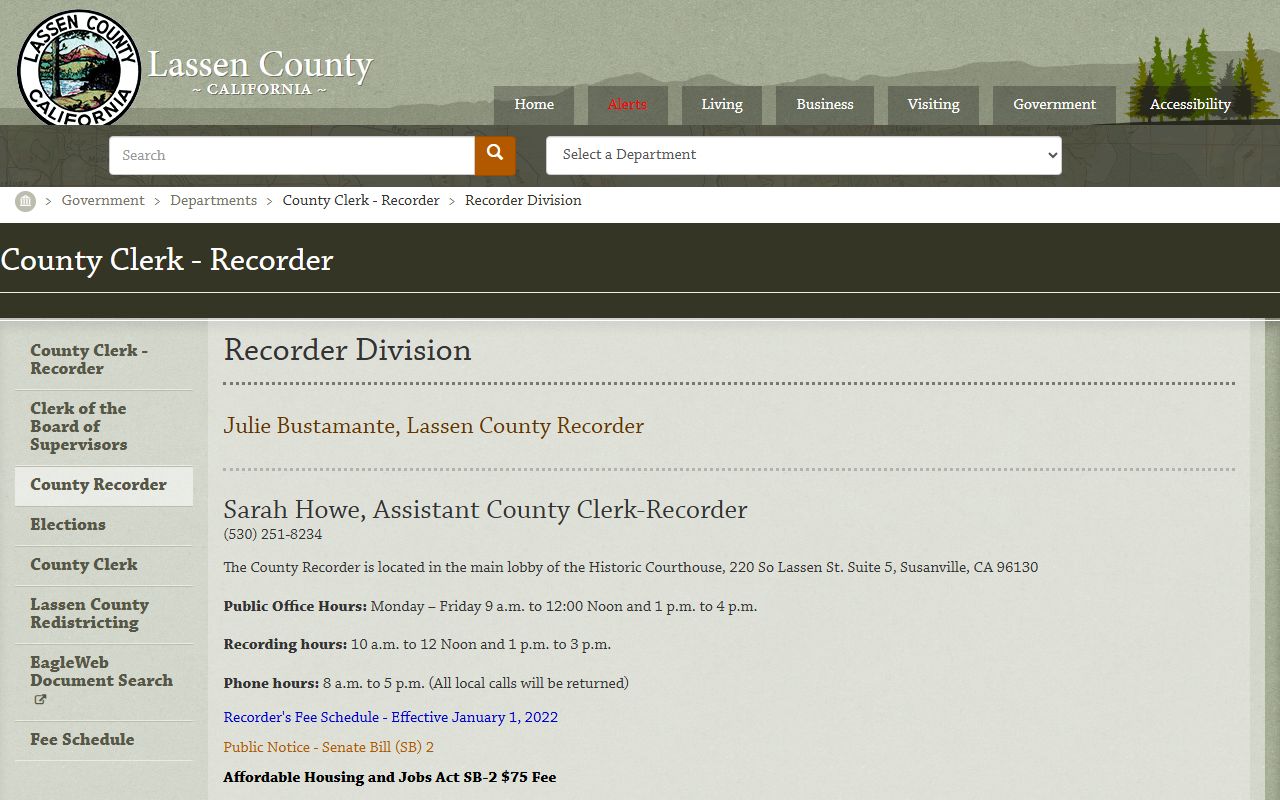
The Lassen County Recorder Division page has details about ordering vital records. You can see the fees and the form you need to fill out. Some counties let you download the form and mail it in. Others want you to come in person. Check the website for current instructions.
Fees and Payment
Death certificates cost $26 per copy in Lassen County. That's the state fee as of January 2026. The law changed and added $2 to the old price. If they search and find nothing, you still pay the fee. They give you a statement that says no record was found. The fee covers their time to look through the files.
You can pay with cash, check, or money order in person. Mail orders need a check or money order. Make it out to Lassen County Clerk-Recorder. Don't send cash in the mail. Some offices take credit cards but not all. Call ahead to ask what payment types they accept. Keep your receipt in case you need to follow up later.
In-Person Requests
The county office is in Susanville. Go there during work hours with your ID and the application. The staff can help you fill it out if you're not sure what to put. They look up the record while you wait if it's not too busy. Older records may take longer to find. You can come back later or wait if you have time.
Bring a valid photo ID. A driver's license or state ID card works best. If you want an authorized copy, bring the notarized form. Some notaries are near the courthouse. Ask the clerk where to find one if you didn't get it notarized yet. The notary charges a fee separate from the county fee.
Mail Requests
To order by mail, send the application form with payment and a copy of your ID. Write your return address clearly so they know where to send the certificate. Processing takes a few weeks. They mail it back to you when it's ready. If you need it faster, ask about expedited service. That costs more but it's quicker.
Include a note if you have questions or special instructions. The staff reads it and can call you if they need more info. Give them your phone number so they can reach you. Some counties email or call to confirm they got your order. Others just process it and mail the result.
Who Can Get Authorized Copies
California law lists who can get an authorized certified copy. Parents, kids, siblings, and spouses qualify. Grandparents and grandchildren can too. Legal guardians and conservators have the right. Lawyers representing the estate or family can get copies. Law enforcement and government workers can get them for official use. Funeral homes can request copies for the families they help.
If you're not on that list, you get an informational copy. It's still a certified copy but it's marked differently. Most agencies won't accept it for legal purposes. It's fine for family history and genealogy. You don't need a notarized form for the informational type. Just fill out the application and send it in.
Historical Death Records
Lassen County has death records from the late 1800s. The oldest files are in archive storage. They may be on microfilm or in old books. The recorder can search them but it takes time. Very old records may have missing info or hard-to-read handwriting. The clerk will do their best to find it.
Before 1905, California didn't keep state-level death records. Each county kept its own files. If you need a record from before July 1905, you have to get it from Lassen County. The state office won't have it. For records after 1905, you can get them from the county or the state. The county is often faster if you know the death was in Lassen County.
Processing Times
Same-day service is possible for in-person requests if the record is easy to find. Recent files are in the computer system. Older records may need to be pulled from storage. That can take a day or two. Mail orders usually take two to three weeks. Online orders through third-party sites are faster, often one to two weeks.
Deaths that just happened may not be on file yet. It takes time for the doctor, funeral home, and county to finish the paperwork. Wait at least a month after the death before you order. If it's urgent, call and ask if the file has been received. They can check without charging you a fee.
What Info You Need
The application asks for the full name of the person who died. First, middle, and last names help. If you don't know the middle name, that's okay. Give the date of death or the year if you don't know the exact date. The place of death should be in Lassen County. If you're not sure, give the city or town.
You also fill in your own name and address. Show your relationship to the person. If you're ordering for someone else, explain that. The more detail you give, the better. It helps them find the right file and know what type of copy to give you.
Uses for Death Certificates
People need death certificates for many things. Life insurance won't pay without one. Social Security needs it to stop benefits and handle survivor claims. Banks need it to close accounts or transfer money. Probate courts need it to settle estates. Real estate deals need it if the owner died. Some states need it to transfer a car title.
Genealogy is another common use. Family historians want to confirm dates and places. Death certificates show where someone was born, who their parents were, and where they died. That info helps build a family tree. The informational copy works fine for this. You don't need the authorized version unless you're doing legal work.
Privacy Rules
Death records are public in California but access is limited. The law protects personal information. Not everyone can get the full authorized copy. The rules prevent fraud and identity theft. The clerk checks your ID and your relationship before giving you an authorized copy.
If you're not family or a legal agent, you get the informational copy. It's still useful for research but it can't be used for legal ID. That's why it's stamped with a notice. The authorized copy has no stamp. It's valid for all legal purposes.
Contact the Recorder's Office
Call before you visit to confirm hours and fees. The county website has phone numbers and addresses. Email may be available for questions. For complex requests, phone or in-person is better. The staff can walk you through the process and tell you what to bring.
Nearby Counties
- Modoc County - North of Lassen County
- Plumas County - West of Lassen County
- Shasta County - Southwest of Lassen County